Sonntag, 13. Februar 2011
Growth, speed, distant sensorium, memory, learning
Looking at evolution since the Cambrian revolution, the main decontextualising traits are growth, speed, the development of distant sensorium (eyes, lateral organs, ears), growth of central nervous systems and a more and more developed ability to learn.

Samstag, 18. Dezember 2010
The abilities of money
Money is a virtual access medium. Virtual because it has no direct impact on things. It only makes sense, if you want to gain access to things from someone other.
I try to think of money as a signal! A special kind of signal.
A signal
- that can be quantified
- that is universal (in a specific currency space)
- that's valuable (there is a hidden corresponding valuespace of things and services)
Sonntag, 31. Oktober 2010
Language as a distance and time breaker
A very simple experiment: Try to communicate with your family without words. What happens? You c a n transmit a certain part of your feelings and moods, but you are not able to evoke a complex action, that you intend the partner to do. Therefore there is no possibility to take effect on long distances in space and time.
Samstag, 2. Oktober 2010
Quantity has an impact on quality
In decontext quality has an impact on quality. A simple example: The enhancing of computer memory, the capacity of hard drives and the growing connection speed in the internet are enabling quite new qualitative features like social networks and fast accessable databases.
Mittwoch, 22. September 2010
Object-creation as a critical event
Object invention was a critical event in decontextual evolution. It needs a lot of requirements, that have to be fullfilled (warmbloodedness, consciousness, highly developed hands or beaks...). We have true object creators in two lines, in apes and humans and simultaniously in the Corvidae family(songbirds).
By object creation the limitation on organs has been abolished. The distance of effects and the time perspective of effects are 'exploding', it's like a supernova, a very dynamic process. They are now limited by lightspeed (information) and mass-velocity (things).
But we have to keep in mind: Decontextualisation is a persistant feature in evolution from the very beginning. Warmbloodedness for instance could be conceived as an distance creating process. A temperature difference to the environment has been established and preserved by means of isolation (hair, feathers and fat).
Klassische Situation vor der Objektbildung:
http://negativespace.photoshelter.com/gallery-image/Battle-at-Kruger/G0000BKdsdu_729U/I0000wURP0aQjWcQ
By object creation the limitation on organs has been abolished. The distance of effects and the time perspective of effects are 'exploding', it's like a supernova, a very dynamic process. They are now limited by lightspeed (information) and mass-velocity (things).
But we have to keep in mind: Decontextualisation is a persistant feature in evolution from the very beginning. Warmbloodedness for instance could be conceived as an distance creating process. A temperature difference to the environment has been established and preserved by means of isolation (hair, feathers and fat).
Klassische Situation vor der Objektbildung:
http://negativespace.photoshelter.com/gallery-image/Battle-at-Kruger/G0000BKdsdu_729U/I0000wURP0aQjWcQ
Samstag, 18. September 2010
Decontextualisation row in ballistic weapons
Weapons are the oldest objects in the history of mankind. I want to show in a decontexualisation row the ongoing gain of effectiveness by decontextualisation:
1. The spear:
It's a very old weapon. Homo erectus used it 400 000 years ago. It's a real object, because there is no fixed connection between the user and the spear. It's also made by conscious actions of the creators. Therefore it's different from pseudobjects like spidernets, beaverdams or the spitted waterdrops of a Banded Archerfish, which are caused by genetically driven behaviour. As a ballistic weapon it doesn't stay in the hand of the user. So the distance of effect is longer than the length of the human arm plus the length of the object.
2. The spear and the atlatl:
The atlatl is in a loose connection to the spear and enhances the range of the spear by the enlarged leverage of the human arm.
3. Bow and Arrow:
The Bow and Arrow is quite an interesting step in the evolution of weapons. For the first time, we have something in weapon technology that we can call transformation. The energy needn't to be directly transmitted into the mass-velocity of the spear, but could be accumulated in the strain energy. The advantage is obvious: The final velocity of the midth of the bow string is much higher than the velocity of a human arm.
Typical for many decontextualisation processes is separation. There are three different parts: The bow, the string and the arrow. They could be sensefully pooled in a propulsion unit and projectile unit. The mass part of the projectile is reduced and the velocity part is enlarged. The distance between the originator and the target is growing again, by the price of a much higher complexity.
4. Crossbow:
The crossbow is implementing something very widespread in decontextualisation, the depot. The depot is used to contain and store ressources for the moment, when we need it. We could find depots on all decontextualisation levels. Very high level depots are banks, databases, archives ... The crossbow has a release mechanism to allow the stored strain to transform in mass-velocity. The decontext moves also in another direction: the production of the projectiles was sometimes 'outsourced'. The profession of the 'fletcher' was born. The fletches are the small feathers stabilizing the trajectory of the missiles.
5. Gun:
In this decontextualisation step chemistry is entering the scene. The energy accelerating the projectile is not derived from the human muscle anymore. Therefore the design of the weapon has to be changed. Mostly everything has to be encorporated in a tube. The reason is very simple: The explosion process of the gun powder has to be directed.
6. Gun and rounds:
What's happening. A process is encapsulated. The process of loading the gun is now encapsulated in a thing. The production of the thing could happen anywhere. A time-space de-coupling is made.
7. Machine-gun:
The firepower is increased by a mechanism of repetition, which dispenses the gunner from releasing every single shot.
Exkursus:
Concepts like 'encapsulation' could only be realised at certain stages. There is a certain amount of complexity necessesary to 'allow' certain concepts. The concept of 'repetition' is more likely to be after the concept 'encapsulation, because encapsulated rounds are easy to fire. A preloaded Gatling Gun is thinkable, but is not very likely to emerge.
.
1. The spear:
It's a very old weapon. Homo erectus used it 400 000 years ago. It's a real object, because there is no fixed connection between the user and the spear. It's also made by conscious actions of the creators. Therefore it's different from pseudobjects like spidernets, beaverdams or the spitted waterdrops of a Banded Archerfish, which are caused by genetically driven behaviour. As a ballistic weapon it doesn't stay in the hand of the user. So the distance of effect is longer than the length of the human arm plus the length of the object.
2. The spear and the atlatl:
The atlatl is in a loose connection to the spear and enhances the range of the spear by the enlarged leverage of the human arm.
3. Bow and Arrow:
The Bow and Arrow is quite an interesting step in the evolution of weapons. For the first time, we have something in weapon technology that we can call transformation. The energy needn't to be directly transmitted into the mass-velocity of the spear, but could be accumulated in the strain energy. The advantage is obvious: The final velocity of the midth of the bow string is much higher than the velocity of a human arm.
Typical for many decontextualisation processes is separation. There are three different parts: The bow, the string and the arrow. They could be sensefully pooled in a propulsion unit and projectile unit. The mass part of the projectile is reduced and the velocity part is enlarged. The distance between the originator and the target is growing again, by the price of a much higher complexity.
4. Crossbow:
The crossbow is implementing something very widespread in decontextualisation, the depot. The depot is used to contain and store ressources for the moment, when we need it. We could find depots on all decontextualisation levels. Very high level depots are banks, databases, archives ... The crossbow has a release mechanism to allow the stored strain to transform in mass-velocity. The decontext moves also in another direction: the production of the projectiles was sometimes 'outsourced'. The profession of the 'fletcher' was born. The fletches are the small feathers stabilizing the trajectory of the missiles.
5. Gun:
In this decontextualisation step chemistry is entering the scene. The energy accelerating the projectile is not derived from the human muscle anymore. Therefore the design of the weapon has to be changed. Mostly everything has to be encorporated in a tube. The reason is very simple: The explosion process of the gun powder has to be directed.
6. Gun and rounds:
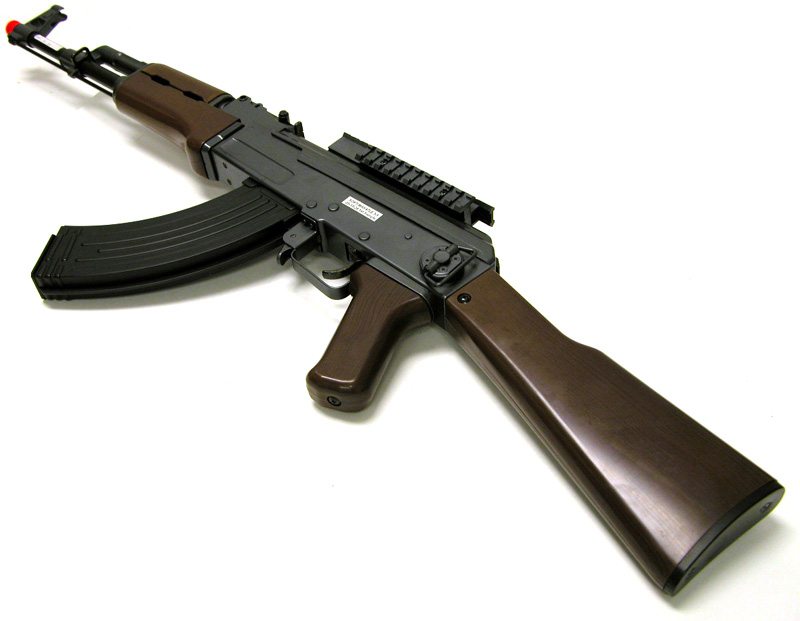
What's happening. A process is encapsulated. The process of loading the gun is now encapsulated in a thing. The production of the thing could happen anywhere. A time-space de-coupling is made.
7. Machine-gun:

The firepower is increased by a mechanism of repetition, which dispenses the gunner from releasing every single shot.
Exkursus:
Concepts like 'encapsulation' could only be realised at certain stages. There is a certain amount of complexity necessesary to 'allow' certain concepts. The concept of 'repetition' is more likely to be after the concept 'encapsulation, because encapsulated rounds are easy to fire. A preloaded Gatling Gun is thinkable, but is not very likely to emerge.
.
Freitag, 10. September 2010
We humans are in a very special condition. On the one hand, we are able to decontextualise so many things by technical means, on the other hand, we are very dependent on our social network, our parents... We could call this recontextualisation. Recontextualisation means, that something is moved from a more distant position in a more proximal one to something. An example is parental care in animals. The adults with the better decontextulisation features transmit resources to the less decontextualised larvae or cubs, that are now dependent.
An example for a Hymenopterae-Larva, which is totally indepent in its development, but has the disadvantage of not having the possibilities of a fully adult insect (imago) e.g. ability to fly.Larva of a sawfly.
An example for a recontextualised Hymenopterae-Larva, which is totally dependent on more decontextualised adults: Larva of the Hornet. The advantage is the separation of acquisition of food(imago) and growing(larva).
An example for a Hymenopterae-Larva, which is totally indepent in its development, but has the disadvantage of not having the possibilities of a fully adult insect (imago) e.g. ability to fly.Larva of a sawfly.

An example for a recontextualised Hymenopterae-Larva, which is totally dependent on more decontextualised adults: Larva of the Hornet. The advantage is the separation of acquisition of food(imago) and growing(larva).
Abonnieren
Kommentare (Atom)