Weapons are the oldest objects in the history of mankind. I want to show in a decontexualisation row the ongoing gain of effectiveness by decontextualisation:
1. The spear:
It's a very old weapon. Homo erectus used it 400 000 years ago. It's a real object, because there is no fixed connection between the user and the spear. It's also made by conscious actions of the creators. Therefore it's different from pseudobjects like spidernets, beaverdams or the spitted waterdrops of a Banded Archerfish, which are caused by genetically driven behaviour. As a ballistic weapon it doesn't stay in the hand of the user. So the distance of effect is longer than the length of the human arm plus the length of the object.
2. The spear and the atlatl:
The atlatl is in a loose connection to the spear and enhances the range of the spear by the enlarged leverage of the human arm.
3. Bow and Arrow:
The Bow and Arrow is quite an interesting step in the evolution of weapons. For the first time, we have something in weapon technology that we can call transformation. The energy needn't to be directly transmitted into the mass-velocity of the spear, but could be accumulated in the strain energy. The advantage is obvious: The final velocity of the midth of the bow string is much higher than the velocity of a human arm.
Typical for many decontextualisation processes is separation. There are three different parts: The bow, the string and the arrow. They could be sensefully pooled in a propulsion unit and projectile unit. The mass part of the projectile is reduced and the velocity part is enlarged. The distance between the originator and the target is growing again, by the price of a much higher complexity.
4. Crossbow:
The crossbow is implementing something very widespread in decontextualisation, the depot. The depot is used to contain and store ressources for the moment, when we need it. We could find depots on all decontextualisation levels. Very high level depots are banks, databases, archives ... The crossbow has a release mechanism to allow the stored strain to transform in mass-velocity. The decontext moves also in another direction: the production of the projectiles was sometimes 'outsourced'. The profession of the 'fletcher' was born. The fletches are the small feathers stabilizing the trajectory of the missiles.
5. Gun:
In this decontextualisation step chemistry is entering the scene. The energy accelerating the projectile is not derived from the human muscle anymore. Therefore the design of the weapon has to be changed. Mostly everything has to be encorporated in a tube. The reason is very simple: The explosion process of the gun powder has to be directed.
6. Gun and rounds:
What's happening. A process is encapsulated. The process of loading the gun is now encapsulated in a thing. The production of the thing could happen anywhere. A time-space de-coupling is made.
7. Machine-gun:
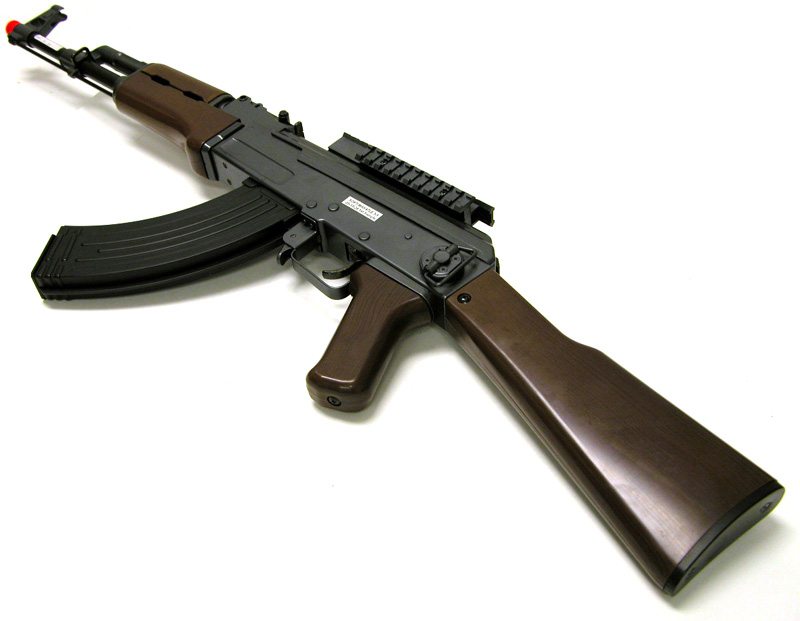
The firepower is increased by a mechanism of repetition, which dispenses the gunner from releasing every single shot.
Exkursus:
Concepts like 'encapsulation' could only be realised at certain stages. There is a certain amount of complexity necessesary to 'allow' certain concepts. The concept of 'repetition' is more likely to be after the concept 'encapsulation, because encapsulated rounds are easy to fire. A preloaded Gatling Gun is thinkable, but is not very likely to emerge.
.


Keine Kommentare:
Kommentar veröffentlichen